
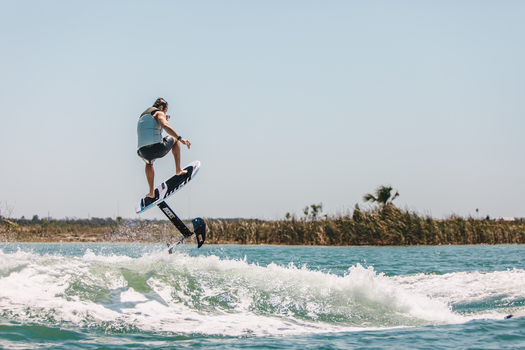


Rise Above: Complete Wakefoil Kits and Wakefoil Gear
Welcome to the future of wakesports. Our Wakefoils Collection offers everything you need to experience wakefoiling behind the boat. From high-stability Complete Foil Kits perfect for first-timers, to customizable components for advanced riders, we provide the best foil boards, wings, and masts in the industry. Learn to fly with gear built for smooth, effortless gliding.
Read More About Wakefoil Kits and Components
Complete Wakefoil Kits vs. Separate Components
For those new to the sport, our easy-to-use Complete Foil Kits include everything: the board, mast, wings, and all necessary hardware—providing guaranteed performance and compatibility right out of the box. More experienced riders can fine-tune their setup by shopping individual Foil Boards or upgrading their system with different masts and wings to adjust lift and speed. The modular nature of modern foiling gear allows you to perfectly match your gear to the wake and conditions.
Choosing the Right Mast and Wings
The length of the mast dictates how high you can ride and is key for learning (shorter is easier). The size and shape of the front and rear wings determine the lift and speed. Larger front wings offer early, stable lift—ideal for catching the wake easily. Smaller, higher-aspect wings are faster and more agile, allowing for aggressive pumping and advanced carving. Browse our selection of Masts and Wings to customize your perfect wakefoil setup.
Frequently Asked Wakefoiling Questions (FAQ)
Q1: What is a wakefoil, and how is the riding experience different from wakesurfing?
A wakefoil is a board with a long mast and a wing-like plane attached underneath, which lifts the board completely out of the water, allowing the rider to glide silently above the surface.
- Minimal Drag: Foiling cuts through the water with minimal resistance, feeling like a smooth "powder day." Wakesurfing engages directly with the water's surface.
- Riding Area: Wake foilers can glide effortlessly across multiple wakes and explore a much larger area of the water.
- Versatility: Wake foiling can be done behind virtually any type of boat or water vessel that has enough horsepower to get the foiler out of the water, and at much lower speeds.
Q2: What is the ideal speed for wakefoiling, and what kind of boat or wake is needed?
The ideal speed for wakefoiling is significantly slower than for wakesurfing, typically between 6–10 MPH. You can foil behind pre much any boat or vessel as long as it has enough horsepower to get the foiler out of the water. While you can certainly foil behind gentle, small wakes, using a bigger boat and a bigger wake just allows more opportunity to ride further back on the 2nd, 3rd, or even 4th wave.
Q3: What are the main parts of a wakefoil, and how does the wing size affect performance?
The main parts are the Board, the Mast, the Fuselage, and the Wings (front and back). The shape and size of the wing are what primarily determines lift and affects whether the foil is good for beginners or for advanced pumping.
- Beginner/Intermediate Wings (e.g., ~1300 cm²): A wing size around 1300 cm² is the perfect and most popular starting point, offering great stability and lift at slow speeds.
- Advanced Wings (Smaller): Smaller wings require more speed but allow for higher top speed, greater pumping efficiency, and tighter, more aggressive carving.
Q4: Is a short or long mast better for wakefoiling?
The mast length determines how high you can glide above the water, impacting stability and skill requirements:
- Short Mast (Under 20 inches): Best for beginners. Keeping the board closer to the water makes it easier to learn and is more stable.
- Long Mast (24 inches and longer): Best for intermediate to advanced wakefoilers. Every little foot placement matters due to less stability.
Q5: How does rider weight and board size affect wakefoiling performance?
Unlike wakesurfing, rider weight primarily affects the necessary lift generated by the mast and wings, not the board itself. The board's size determines the surface area, which is key for stability and ease of starting:
- Bigger Board: More surface area, which is great for larger people or absolute beginners, but it may hinder progression.
- Smaller Board: Less surface area, making it easier to maneuver and more suited for intermediate and advanced foilers (or smaller children).
Q6: Is it harder to learn wakefoiling or wakesurfing?
Wakefoiling has a steeper initial learning curve than wakesurfing. The process of learning to balance the mast and control the height ("pitch control") takes practice. However, once you master the fundamentals and find the "sweet spot," foiling is actually easier on the body than wakesurfing and requires significantly less energy due to the minimal drag.
Q7: Do I need a special board for a wakefoil, and what kind of mounting system is used?
Yes, you need a specialized foil board. These boards are typically shorter than wakesurfers, featuring internal reinforcement and a mounting plate that supports the high forces exerted by the mast. Virtually all modern wakefoils use the two-track mounting system (also called a track box), which allows the rider to adjust the foil's position (forward or backward) to fine-tune the lift and balance.
Q8: What is "pumping," and how does it allow the rider to generate speed?
Pumping is the technique of rhythmically moving the board up and down using your legs. This motion creates additional lift and propels the board forward, essentially allowing the rider to generate their own momentum and speed without relying on the boat. This advanced skill is what allows riders to drop the rope entirely and "surf" multiple wakes or carve on flat water until they lose speed.
Q9: What are the biggest safety concerns when wakefoiling?
The main safety concern is the exposed wing and mast. Best practice is to never try and save a fall; if you are about to fall, just bail. This prevents the foil from coming up and hitting the foiler.
- Mast Length: The shorter the mast (e.g., the Ronix Shift Mast), the less likely the foil will come up and hit the rider, which is why we recommend shorter masts for beginners.
- Safety Gear: Always wear a life vest, whether Coast Guard Approved or an impact vest.


