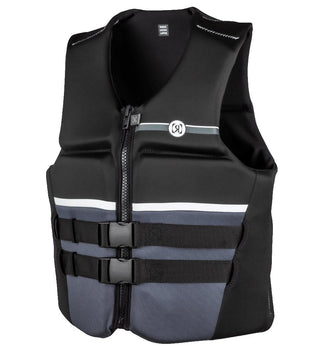
Safety on the water is non-negotiable, but that doesn't mean you have to sacrifice comfort or mobility. At Wakesports Unlimited, our selection of Coast Guard Approved (CGA) life jackets is curated to provide maximum flotation and legal compliance without the bulk. We are fully stocked with Ronix Life Jackets because they utilize high-grade neoprene and foam segmentation, ensuring your vest moves with you whether you are wakeboarding, skiing, or tubing.
Read More
A CGA life vest is a legal requirement on almost all waterways, but the difference between a high-end vest and a standard rental is in the foam distribution. Our performance vests feature flex-panels and "armhole" tailoring that prevent the vest from riding up into your face while you are in the water. From lightweight neo-vests to durable nylon options for the whole family, we have the right fit to keep you safe and legal all season long. Have questions about sizing for kids or adults? Call our experts at 858-277-5757.
Life Jacket Selection & Safety FAQ
Q1: What does "Coast Guard Approved" actually mean?
A CGA life jacket (Type III PFD) has been tested and certified by the U.S. Coast Guard to provide a specific amount of buoyancy (flotation) to keep a conscious person afloat. These are the only vests that satisfy legal carriage requirements on a boat. While "Competition Vests" or "Impact Jackets" are thinner and easier to move in, they do not provide enough flotation to be legal and will not keep your head above water in an emergency.
Q2: How should a performance life vest fit?
Your life vest should fit very snug when dry. Neoprene expands when it gets wet, so a vest that feels "perfect" or slightly loose in the shop will likely be too big once you are in the water. A properly fitted vest should stay in place when you pull up on the shoulders; if the armholes hit your ears, the vest is too large. Always check the specific size chart on the product page, as a "Large" in one style may fit differently than a "Large" in another style.
Q3: What is the difference between Neoprene and Nylon life jackets?
The choice between materials usually comes down to use-case:
Neoprene: Offers a contoured, "second-skin" fit. It is much more comfortable for active sports like wakeboarding and skiing because it stretches and stays in place.
Nylon: Often referred to as "guest vests." They are highly adjustable and much more affordable, making them great for tubing or keeping on the boat for occasional visitors. They do not stretch, so they tend to feel more "boxy."
Q4: Why do some life jackets have more segments in the foam?
Higher-end CGA vests use segmented foam panels (often called "flex-architecture") to allow the vest to bend with your torso. Cheap vests use solid blocks of foam that resist movement. If you are doing tricks or crossing wakes, a segmented vest allows you to move freely without the jacket "riding up" or restricting your breathing.
Q5: How do I care for my life jacket to make it last?
After every set—especially in salt or brackish water—rinse your life vest with fresh water. Hang it to dry in a shaded, well-ventilated area. Never leave your life jacket in direct sunlight for extended periods, as UV rays will break down the neoprene and cause the foam to become brittle, compromising your safety.